Academics
Providing an Outstanding Medical Education
Mercer’s School of Medicine offers a full four-year M.D. program on the Macon, Savannah, and Columbus campuses. We offer exceptional clinical rotations through strong partnerships with regional health care institutions, organizations and individuals. These rotations provide opportunities to develop a broad, deep knowledge of health issues facing patients as well as the development of strong clinical skills and interdisciplinary teamwork.
In addition to the M.D. program, Mercer University School of Medicine offers Ph.D. programs in Biomedical Sciences and Rural Health Sciences, as well as graduate degree programs in Preclinical Sciences and Family Therapy.
Academic Programs
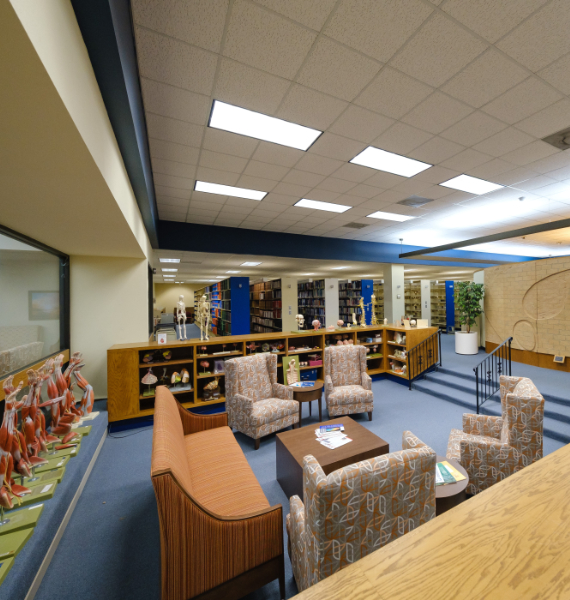
Library
Access the resources you need at the Skelton Medical Libraries.