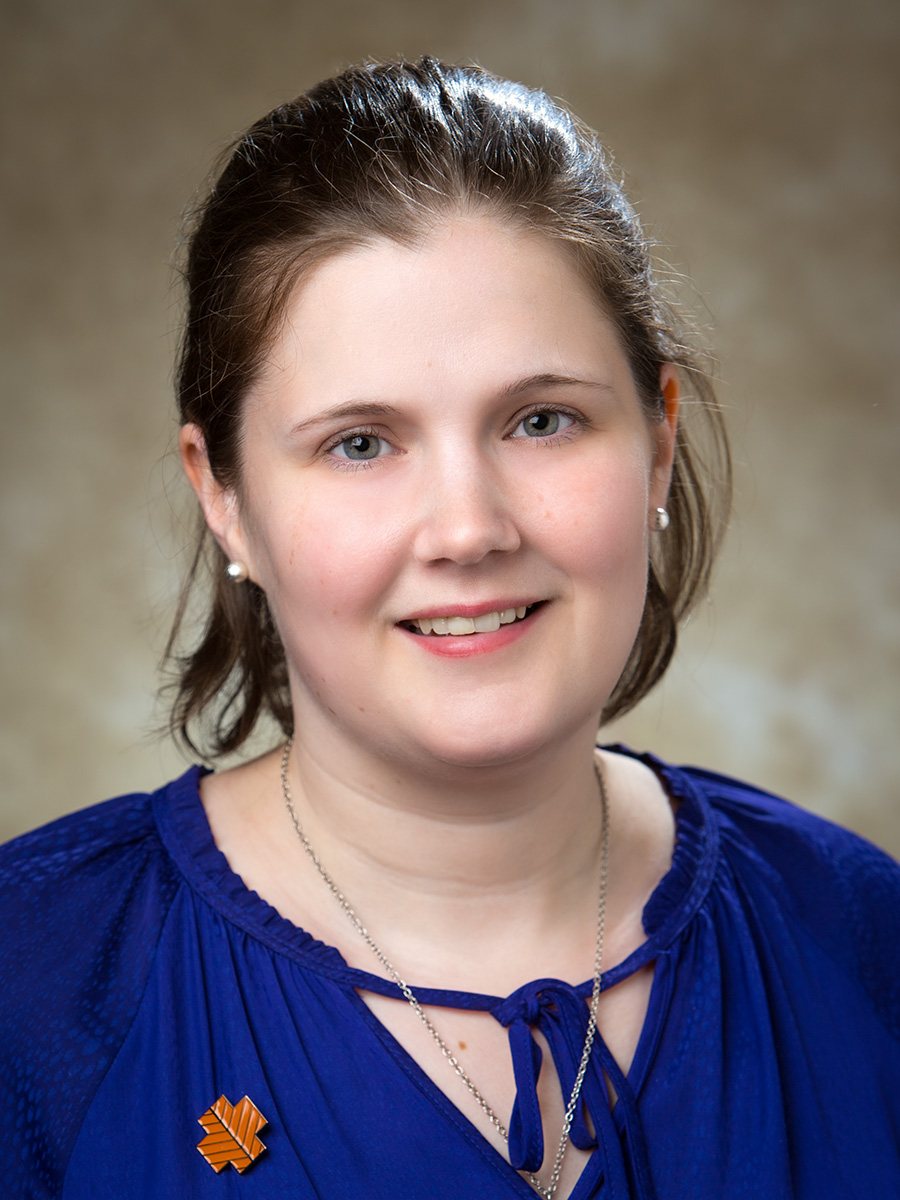
Message from the
Program Director
Thank you for your interest in the PhD in Rural Health Sciences at Mercer University School of Medicine.
The School of Medicine was founded in 1982 with a clear purpose: to meet the health needs of rural underserved Georgia. That mission still drives us. What began with training physicians for rural practice has expanded into graduate education designed to strengthen rural health systems through research, leadership and long-term community partnership.
The mission of the PhD in Rural Health Sciences is straightforward: to conduct rigorous, multidisciplinary research that improves health outcomes in rural communities and informs evidence-based decision-making. Our vision is equally clear. We aspire to advance rural health excellence by preparing experts who bring interdisciplinary depth and work directly with communities to develop sustainable, equitable solutions. We do not separate methodological rigor from practical relevance. Our research is designed to stand up academically and to work in the real-world conditions rural communities face.
This program develops leaders, not just analysts. Our graduates generate actionable knowledge that informs policy, strengthens rural health systems, and translates into measurable community impact. Rurality is not an add-on to a more generic public health curriculum; rurality is the foundation of our inquiry. We confront the realities of workforce shortages, hospital closures, transportation barriers, and geographically shaped social determinants of health head-on. Students learn to design solutions that are feasible within rural workforce, infrastructure and resource constraints — solutions that are built to last.
Approximately 20% of Americans live in rural communities. The challenges are complex, and they require scholars who understand context as deeply as they understand methodology. That is the niche we fill.
In fall 2026, the program transitioned to a blended format built for working professionals. Courses are primarily held online in the evenings, with limited in-person sessions on Saturday mornings as needed. The changed structure might be more flexible for working professionals, but the expectations remain equally high as an in-person full-time program.
What sets this program apart is focus and mentorship. Small cohorts allow for close faculty guidance and meaningful scholarly development. Applied learning is embedded throughout the curriculum, consistently linking advanced research design and analytics to real rural health challenges. We expect our students to think critically, engage openly and produce work that makes a difference.
If this mission resonates with you, I encourage you to explore our curriculum and admissions pages. We are here to support you every step of the way.
-

Anne Montgomery
PhD
Program Director, PhD in Rural Health Sciences
Associate Professor, Department of Community Medicine
Biostatistician, Georgia Rural Health Innovation Center